Sunday, November 20, 2011

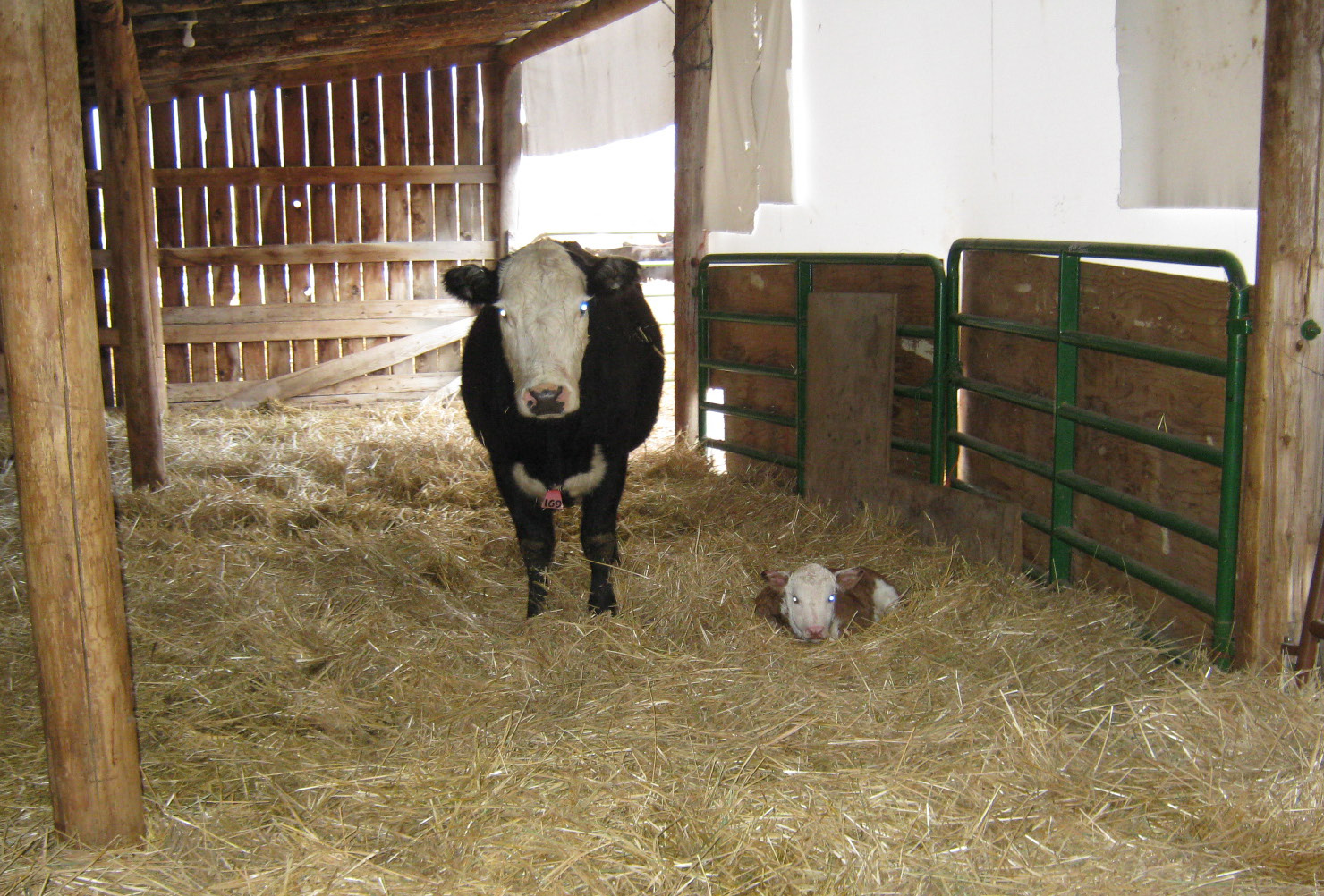
FALL WEANING OF THE CALVES


                                          Fall round-up to separate cows and calves.

           It’s time to wean the calves. Some of the older calves will probably already be weaned by their moms, and that’s
            I wear more than one hat at this time of the year. First I’m the cook. I have to decide what I’m going to feed the multitude that shows up to help round up the cows and calves. I usually have two menus in mind, one for a cold stormy day, and another for a warmer day. That way I can usually decide the day before the grand event which menu will work best. I get the beans cooked for chili, and the hamburger browned for sloppy joes. Those are in the freezer about two weeks before, and the rest of the ingredients for either are on hand.
            This year we moved our camp trailer over to the corral at Hell Creek, so that was much easier on me – I didn’t have to transport the food. We fed 11 the first day, 13 the second day and lost count the third day as we had quite a few come to help that we hadn’t planned on. But everyone got something to eat! I had a commitment on the third day so just made sure that food was at the ranch for the guys and they served themselves.
            We had a big crew helping with our three day round-up. Because summer pasture covers quite a large area, the men divided it up into three areas and worked one area a day for the three days. It worked out really well. 
            The other hat I sometimes wear is the “helper” hat. I might be needed to drive a pickup or the gater and be right out with the men rounding up the animals. I no longer ride a horse, didn’t do much of it before, but at this age the saddle and I don’t always feel good together, besides the problem of getting my leg up and over the saddle. Gravity has a greater pull on my body now than it used to.
            We always hope for some rain or even snow a few days before we start the round up, so we can possibly get by without having to doctor for dust pneumonia. That can kill a calf pretty fast, so we don’t want those calves running through any more dust than necessary.
            As the cows and calves are separated, the noise is almost deafening; the calves bawling in one pen, cows answering from another. We truck the calves to the valley to put in corrals behind our house, right close to our bedroom window. The calves bawl for about three days and nights – 24 hours straight – or at least it seems like it. And it keeps us awake. Have you ever been around a group of babies, say about a year old or a little younger when one of them starts to cry? It isn’t long before all of them are crying.  Well, calves are the same way. Wean one calf and the time is much shorter for the bawling period than when a herd of calves are weaned.
            The cows will be trailed down in about a month, and when they get down they nor the calves seem to recognize each other. The time of dependence is gone.
           

Monday, November 14, 2011

SLOWING DOWN

I'm trying to slow down. It hasn't been easy. And I find myself regressing quite often. Take last Tuesday, for instance. Getting morning rituals (like breakfast, making bed, doing dishes) over with, I kept plowing on.
After water aerobics, I decided to go to the local outdoor market and pick up some corn to freeze. While there the apples caught my eye and I thought, why not make apple pie filling today too.  BAM! There went slowing down for the rest of that day. AND while I was making the apple pie filling, the idea of making an apple pie came to me. Why not?  Of course, after doing this sticky kind of canning and freezing, the kitchen floor had to be mopped.  But the house smelled good with the apple pie baking. By the time Boyd and Jon got down from the ranch, I was exhausted and fixing supper was not something I could face. So we went out for a hamburger. Not a good day as an example of slowing down!

But the days I have periods of slowing down have been worth the effort. The interesting thing about this is I have to be fully aware of my effort to slow down in order to make it work!

Yesterday, Saturday, I did a pretty good job of it. I got a few things done without rushing through them. Then Boyd asked if I wanted to ride to the ranch with him to check the cattle. I didn't hesitate. When we got to the house we transferred from the pickup to the John Deere Gater. What a wonderful afternoon: hair blowing in the breeze created by the Gator; dust flying around us; hot sun shining on us. 

We rode around one of the old homesteads, walked around the foundation of the home on that piece of land, and some some of the old rusted tools and equipment left behind. Then we drove around some of the springs in the area - most of them drying up if not dried up because of the lack of rain this past month. 

The fall leaves on the trees were beautiful.  We did see one pine hen, but that was the only wild animal we encountered, but it was the middle of the afternoon when we were riding around. If it had been later in the day we would probably have seen deer and moose.

No, I didn't get everything done I had planned on, but those things can be done another day or just eliminated competely from by my "to do" list.  What I did accomplish was a pleasant afternoon with my husband, spent in an area I love.

Last night I was reading and came upon a sentence that summed up my day: "I'd forgotten that quiet pleasures can be good for the soul."  Yes, yesterday my soul was replenished, my physical being was replenished! I must do this more often!

Sunday, November 13, 2011

WHAT IS VETERAN'S DAY


Published in the Intermountain Farm & Ranch on November 11, 2011

            On the 11th hour of the 11th day of the 11th month of 1918 an armistice between Germany and the Allied nations came into effect. On November 11th, 1919 Armistice Day was commemorated for the first time. This day was originally intended to honor veterans of World War I. However, World War II required the largest mobilization of service men in the history of the United States. American forces also fought in Korea. So in 1954 the veteran’s service organizations urged Congress to change the word “Armistice” to ‘Veterans”. Congress approved this on June 1, 1954, and November 11th became a day to honor all American veterans, where ever and whenever they had served.
Lloyd Crystal, my uncle, was born in 1896, and as a child, moved to Idaho with his family. He was raised on a farm in the Garfield area, where his father farmed with horses. From his father, David, and two older brothers, Ray and Vern, Lloyd learned how to take care of the horses and loved working them.
War was going on in Europe in 1917 and on Tuesday, April 3, 1917, Lloyd volunteered to enlist in Company M. Second Idaho Infantry National Guard. He was one of the first from Jefferson County to volunteer his services as a soldier. On April 6, 1917, President Woodrow Wilson declared war. August 17, 1917, this entire Idaho Regiment was given a National Guard honorable discharge and the Company transferred into the federal service.
            At Christmas time, 1917, while stationed in Camp Merritt near Tenafly, New Jersey, he wrote the following to his sister: “Dear sister: Old Santa Claus was a pretty good sport to some of us fellows for he came while we were asleep and hung our socks on the foot of our beds with a piece of wire. They were filled with any old thing that came in handy. I found two bottles of ink belonging to the office, a hob-nailed shoe, two hammers, and the stove crank.”
            On the Night of January 9, 1918, Lloyd’s Company received orders to prepare to leave early in the morning. They traveled to the White Star Line Docks and boarded the British ship Olympic. They sailed to Liverpool, England, then on to France where the battalion was split up at Sells-sur-Cher and were sent as replacements to the front. Lloyd with some others was sent to Headquarters Company of the 120th Machine Gun Battalion, 32d division.
            His letters home were few and far between and the return address read “somewhere in France.” In July, 1917 his folks received a letter in which he had attached a postscript: “I will write again in a few days, Mother, as it is nearly another birthday.” That birthday, his twenty-second one, was the last day he lived. The next day he was sent to fill the company’s water cart. He managed his horses in the way he was taught – with love and kindness, working and talking with them like old chums. On that day, June 27, 1918, with the shells bursting, the deafening roar in the distance and the air filled with flying shrapnel, he walked along beside his horses to his death.
            Lloyd Crystal was the first World War I fatality from Jefferson County and was buried in the Arlington Cemetery in Virginia. 

HALLOWEEN JACK O'LATERNS


Published in the Intermountain  Farm & Ranch, October 28, 2011

Halloween is upon us. I can remember the fun time of going trick-or-treating around our country community. We didn’t have costumes purchased at the local stores, but resorted to what we could find in our closets, or sometimes Mom would make us something, using crepe paper and her imagination.  Some examples of our costumes: ghosts, using sheets for our costume; farmers, using Dad’s overhauls; a ballerina, with a crepe paper tutu; a pirate with a patch over an eye; a “bum” with a bandanna tied onto a stick carried over a shoulder. There would always be a large assortment of masks of Disney characters and of course the scary ones that we could buy.
Kids then and now make Jack O’Lantern's, carving them at home, in school, at cub scouts and girl scouts. Every October, these carved pumpkins, with a lighted candle in them, sit on porches, doorsteps and windows of homes in the United States and other countries.
            This practice originated from an Irish myth about a man who was nicknamed “Stingy Jack.” Stingy Jack apparently invited the Devil to have a drink with him. Being true to his nickname, Stingy Jack was hesitant to pay for his own drink, so he convinced the Devil to turn himself into a coin that Jack could use to buy their drinks with. Once the Devil did so Jack decided to keep the coin and put it in his pock. He had a silver cross in the same pocket, and with the coin next to the cross it prevented the Devil from changing back into his original form. Jack finally freed the Devil with the condition that he would not bother Jack for one full year and if Jack happened to die within the year the Devil would not claim his soul.
            The next year Jack again tricked the Devil by getting him to climb a tree to pick some fruit. While he was up in the tree, Jack carved a sign of the cross into the tree’s bark so that the Devil couldn’t come down. This time Jack had the Devil promise not to bother him for ten years.
            Jack died soon after this. The story goes that God would not allow such a deceitful person into heaven. The Devil, upset by the tricks Jack had played on him, kept his word not to claim his soul, thus no allowing Jack into hell. The Devil sent Jack off into the dark night with only a burning coal to light his way. Jack put the coal into a carved-out turnip and has been roaming the Earth with this turnip since. The Irish began to refer to this ghostly figure as “Jack of the Lantern,” now simplified to “Jack O’Lantern.”
            In Ireland and Scotland, people began making their own versions of Jack’s lanterns by carving scary faces on hollowed out turnips, and potatoes then placing them in window sills or near doors to frighten away Stingy Jack and other wandering evil spirits. In England, large beets were used. As people from these countries immigrated they carried with them the Jack O’Lantern tradition. Coming to the United States they discovered that pumpkins, a native of America, made perfect Jack O’Lantern's.
            Kind of fun to learn some of the history of our traditions, isn’t it? Have a fun and safe Halloween, and watch out for "Stingy Jack."

Friday, October 14, 2011

HUNTING TRADITION

                              Grandson Skyler Young, ready to go hunt to provide food for his family.
                                Article printed in Intermountain Farm and Ranch, October 14, 2011


Hunting has been a part of my life forever. I can remember, as a young girl, working in the potato fields and the goal was to get the potato harvest finished in time for the men to go deer or elk hunting. The men talked about it all of the time. And it seems like we always accomplished that goal. I never went hunting; it was a “man” thing to do back then. 
When Boyd and I were first married, a productive hunting season helped feed our family through many winters. I learned to flavor the meat of even the oldest deer so it was edible. Maybe not delicious, maybe not tender, but edible.
The day before opening day of deer or elk season, I would load the car with groceries, get the kids off to school, and drive to the ranch. I’d light a fire in the wood cook stove upon arrival and shut the doors to the rooms next to the kitchen so as to centralize the heat in the room I would be occupying. Then – I’d mix bread, start a big stew on the stove, and make pie dough. While the bread was rising and the pies baking and the soup simmered, I would sweep and mop the floor – even venturing into the colder rooms to straighten the beds and sweep and mop those floors. While the bread baked, I’d wash and dry the dishes, so as to leave everything neat and clean.
After a day of cleaning and cooking, I would be able to get back to our valley home by the time the kids got home from school. And the hunters would be going to a warm house with food waiting for them, the smell of freshly baked bread greeting them as they opened the kitchen door. It seemed so much easier to get that job done at the ranch rather than baking at our valley home and sending the food with Boyd as he left to hunt.
I know that sounds like a lot of work, but I loved being at the ranch then as much as I love it now. There was and is a peacefulness there that I love to bask in. Having no electricity, a battery operated radio is used to give us any news that we think we might need. Most of the time I don’t even turn on the radio; just enjoy the solitude.
There have been many years of hunting, many stories told involving our family and the hunts they have been on.  Last year, as our youngest son, Jon, and one of our grandsons, Skyler, prepared to go hunting on opening day, I fixed sandwiches to send with them. As they walked out the door, Skyler looked at me with a big grin on his face, grunted like a cave man and said, “Me man!”
Were they able to get their prey? No. In fact they didn’t see much game that morning, but did see lots of hunters. However, they participated in the tradition of hunting on opening day. A big event in the lives of both, young men who come from a family of hunters! They were going out to provide food for their family. And though they didn’t see anything to shoot at, they went through the motions expected of a hunting family – they went.

Wednesday, October 5, 2011

AUTUMN LEAVES

                                                               Fall colors at the ranch.
                              Article printed in Intermountain Farm & Ranch, September 30, 2011


         This is a beautiful time of the year as the trees and bushes don their fall wardrobes of red, yellow, orange, and all shades in between. I love to ride through the back country in the fall and marvel at these panoramic views. Around Palisades Reservoir there is usually a fantastic display of fall colors with the aspens and pines combining yellows and greens. Up toward Bone and Gray’s Lake are usually some wonderful patches of fall beauty also. The early morning or late evening sun can really enhance the colors and that’s when I like to take pictures.
The other day Boyd, our son Jon, and I rode up through Brockman and back on the Skyline Road. The leaves were just starting into the “changing of our wardrobe” mode. Some pretty yellows mixed with the greens were visible, but very likely in another week the oranges and reds would overcome all. This has been a dry summer, so there were a lot of trees with “dead” looking leaves. Those aren’t pretty!
            I’ve done a bit of research on the chemical aspect of our fall colors.
There is an old Indian legend that says every fall, heavenly hunters kill and cook a great bear. Blood drips from the sky on the leaves of the earth. Then bear fat spatters from the cooking pot onto leaves, spotting the blood-red leaves with gold.
            And there’s also the tale of Jack Frost, in the fall, flitting from tree to tree with his paint brush and palette to paint the leaves different colors.  Fun stories to tell, but there is more to the story than this.
            Actually, it is three color pigments in combination – xanthophyllous, carotene, and anthocyanin – hiding behind the green chlorophyll in the leaves that dresses them in their autumn finery.
            Variables come into play here, causing the brilliant reds, oranges, and yellows. It seems that the brightest colors come following a warm, dry summer. Dry conditions encourage the production of anthocyanin. Drought conditions will not bring the same results.
            A warm dry summer has to be followed by temperature extremes in autumn. Leaves store more sugars during warm days and the sugars remain in place if the nights are cool. Sugar is a color-enhancing ingredient. So, the warmer the days and cooler the nights without freezing produces the most beautiful effects.
Moisture is also important. Just like the story of Goldilocks and the three bears:
·         too much moisture can ruin the leaf colors;
·         too little moisture causes the trees to drop the leaves early;
·         but just the right amount of moisture adds sparkle and brightness of color to the leaves.
            So, if the summer has been warm and dry – like ours has been this year - and if good rains come early in the fall and then clears, the chances are excellent for natures fall art show.
            Genetics also determines the range of shades within a color. For example, in aspens you can see the shades of yellow from yellowish-orange to yellow canary, and all the shades in between.
Maybe this has been too much information, but I find the factors determining our fall colors interesting. It just adds to the beauty and mystery of our seasons. Let me encourage all of you to go for a ride and view these things yourselves.

Thursday, September 22, 2011

FARMING MAKES SCENTS

                                                      The great cook of "skunk smelling" food.
                                             Article published in Intermountain Farm & Ranch, Sept 16. 2011


One evening I was sitting under the apple tree protecting my chickens from being chased as I let them out of their coop for a few hours in the evening. (Our 7 month old pup thinks the chickens are here for her entertainment.) There wasn’t a breeze but the evening wasn’t quiet – our neighbor was cutting his wheat. That sound is a pleasant one. Got me thinking about the senses used in farming.
We each have five senses: sight; sound; taste; smell; and touch. The sense of smell is one I want to address.
There are some wonderful fragrances that come with the farming business: when the soil is first being worked in the spring; a rain storm; fresh mown hay; wheat when it is ripe and ready to harvest; also wheat as it is being harvested; burning leaves and/or stubble. Because of the Clean Air Act, we don’t have the burning ones very often. The Clean Air Act was necessary, but I always think of fall and burning leaves being synonymous.
The smells of cooking aren’t ones that are limited to the farming community except at noon. On the farm dinner is usually served in the middle of the day. With cooking comes the aroma of fresh baked bread, vegetables, roast or steak, and often cakes or pies.
There are some not-so-pleasant fragrances associated with farming:
            Fuel: Diesel and gas both have strong odors and when fueling the equipment if some spills and gets on clothes, the smell remains until the clothes are vigorously washed.
            Cow/horse/pig/chicken etc. manure. A wet spring can really increase this odor. Most of the time it isn’t bad until it’s loaded into the manure spreader and moved out to the fields as fertilizer. One time we raised some pigs – not many, just 3 or 4 for butchering. A friend visited and the odor of pigs was a bit strong. She asked “doesn’t that smell bother you?” I sniffed the air, looked her right in the face and replied “that smells like money to me.”
            I know our non-farming neighbors often complain about some of the farming scents. But agriculture isn’t the only business with offensive smells. Have you ever walked into a grocery store and the smell of raw fish and meat is so strong it almost takes your breath away? How about some nursing homes, not as much as it used to be – but the smell of urine, sick bodies and disinfectants attacks you upon entering the building. The sewer treatment plant lets off a powerful odor, but you and I contribute to that smell so we shouldn’t complain about it. The smell of the out house wasn’t a pleasant one either, but we learned to live with it.
There is also the smell of wild animals – skunks mainly. That smell is experienced by our urban neighbors also.
Apparently the smells of cooking are not always pleasant at our home. A few years ago when I was a nurse at EIRMC, I was working the 3-11 p.m. shift. One night when I got home, Boyd was asleep. A skunk had sprayed close to our bedroom window. As I was getting ready for bed, the odor of the skunk was really strong. Boyd raised up in bed, looked right at me, sniffed the air and asked “whatcha cooking?” Without waiting for an answer he lay back down and closed his eyes. (He claimed later that he never woke up as he couldn’t remember doing this.)
Our son Jon came home from a scout camp telling me that the meals reminded him of home – all smelled burned. I guess this tells you what kind of a cook I am.
            Scents do affect our lives. We all love the fragrance of flowers, of good home cooked meals, but we need to be tolerant and understanding of other scents connected to living with and around animals and people.